
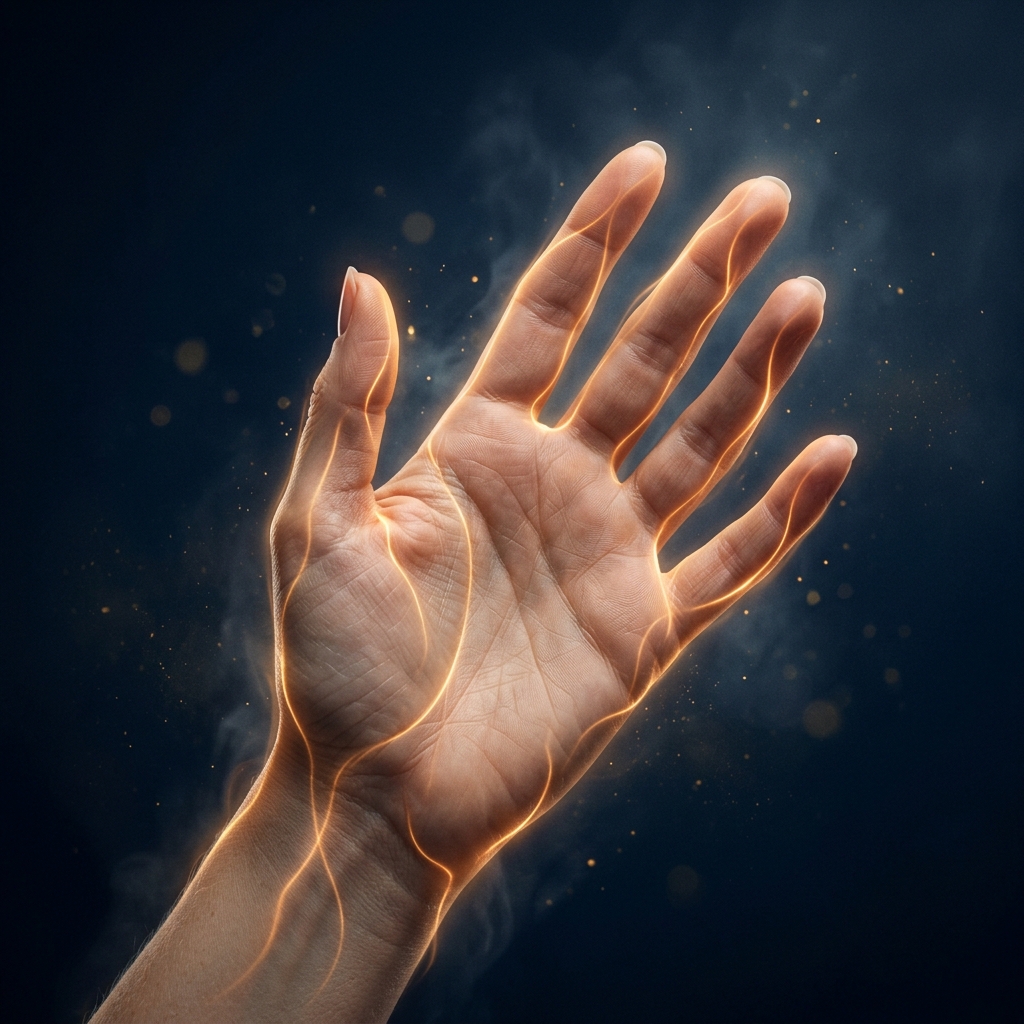
Do you regularly cut the same finger, break a nail on it, or painfully hit it (e.g., against furniture)? Every finger on your hands and toes carries a specific emotional meaning, and such injuries or accidents are rarely coincidental. Let’s explore what each finger represents and what internal conflicts they might be linked to.
Thumb – Opposition, Time, and Assessment
The thumb is the only finger that opposes the rest of the hand, which is why it symbolizes opposition. From the perspective of Total Biology, it is closely linked to the desire to stop time, mirroring the function of the thyroid gland. When we hurry and our body feels we need more time for certain matters, the body may try to slow down metabolism.
The thumb also grants us the ability to grasp. Frequent injuries to it may indicate lowered self-esteem related to a lack of a certain skill. Additionally, it is the finger of judgment (thumbs up – approval, thumbs down – condemnation), so it relates to conflicts of values.
Thumb: Time Conflict
Ask yourself: do you feel time pressure or are you opposing a certain imposed judgment?
Index Finger – Direction, Accusation, and Silence
We use this finger to follow a map and point the way; therefore, it represents our life direction. If we hesitate about where we are going in life, we may experience injuries to the index finger. It is also linked to the adrenal glands.
It is also the finger we use to quiet others or to accuse. Problems with it may mean that we feel silenced, accused by others, or stuck in a situation where we are sacrificing ourselves in silence, without expressing our opinion.
Index: Direction and Voice
Do you have the courage to point in your own direction, or are you afraid of accusations or feeling silenced?
Middle Finger – Sexuality, Creativity, and Honor
The longest finger on the hand represents our life pillars: work, feelings, and sexuality. It is directly linked to our desires (often intimate), the need for independence and freedom in a relationship, and overall creativity.
Injuries to the middle finger may indicate a blockage in our creativity or unfulfilled expectations. They often reflect partner conflicts, such as frustrations, fear of losing a spouse, or the inability to fulfill one's desires. It is also an "honor" finger.
Middle: Creativity and Relationships
Reflect on whether you feel free to express your creativity and desires within your relationship.
Ring Finger – Relationships, Parting, and Torn Feelings
This is the finger where we traditionally wear a wedding ring, so its primary symbolism revolves around all types of relationships. It reacts to breakups, divorces, as well as severing business, emotional, or family ties.
Injuries here may indicate a conflict of being torn. This happens when we feel aggression in a relationship or struggle with the feeling of having to choose between two important sides. It is also a conflict related to the inability to part with someone.
Ring: Bonds and Parting
Are you stuck being torn between two people? Are you afraid of parting or do you feel aggression in a relationship?
Little Finger – Secrets, Home, and Powerlessness
Our smallest finger represents the realm of secrets and lies. In English, it is sometimes called the "auricular finger," referring to the need to talk things out and be heard. It is also linked to conflicts regarding the home.
Since the little finger determines the ultimate strength of our grip, its injuries often indicate a feeling of absolute powerlessness. Problems with it appear when a secret (often ancestral) weighs on us, we have overheard something uncomfortable, or when we sense a lie.
Little: Truth and Powerlessness
What secret are you carrying? Where in your life do you feel powerless against a lie or a secret?
Our body is constantly giving us signals. The next time you hit or cut your finger, think for a moment about what secret, conflict, or unspoken word has just made itself known.
The article is for informational purposes and presents the perspective of Recall Healing. It does not replace medical diagnosis or treatment. Always consult symptoms with a doctor.